
Two-Time Olympian Trains Daily with DRUID to Gain Optimal Performance

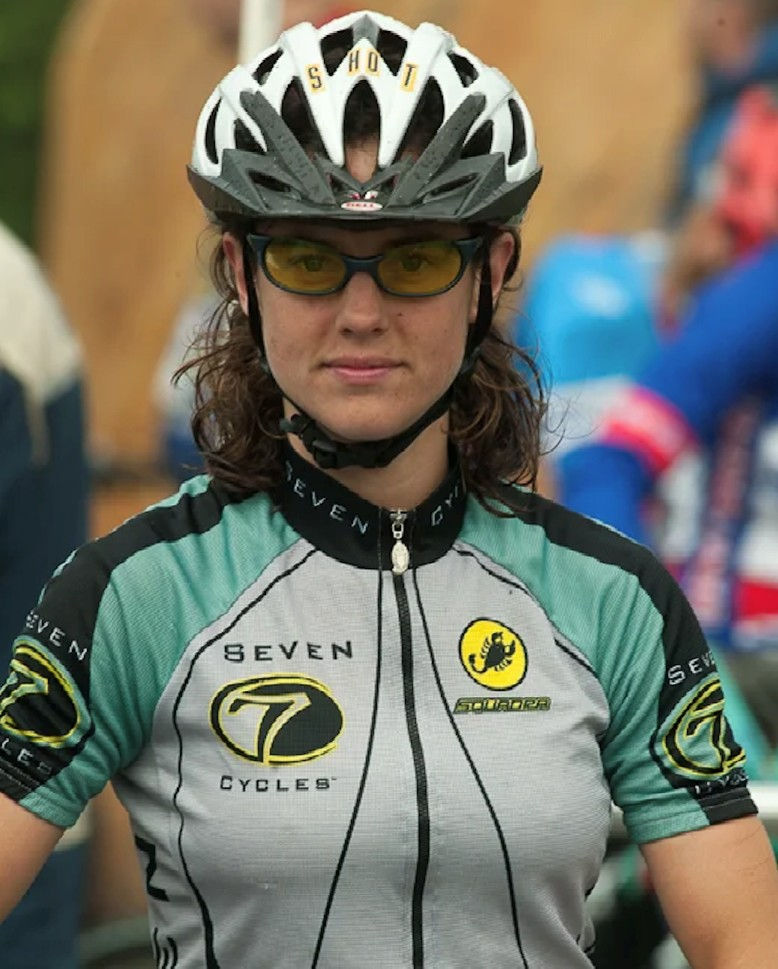
Representing the United States in two Olympic Games as a mountain bike cyclist - in Athens (2004) and Beijing (2008) - a four-time USA Cross-Country Mountain Bike Champion, a four-time Pan American Champion, and with many other accomplishments, Mary McConneloug, now 54, is still attacking the trail. Women Masters Enduro MTB World Champion in 2017 and Pan American Cyclocross Champion in 2022, Mary trains hard, almost every day. As she says, “I give my all to be the best I can be.”
Part of doing so, she says, “is by solving problems with creative solutions and realizing huge goals with modest resources.” As an elite athlete in her 50’s, she continues, “I need more time to recover, or at least I need to train and recover smarter."
In an effort to train smarter, Mary agreed to test a performance app, DRUID, that measures cognitive and psychomotor status. "I know how to suffer on the bike,” she said, “but it’s not enough. At this point in my career, I need to get better at getting better!
DRUID is an app, developed by Cambridge MA-based Impairment Science, Inc., that tests for impairment due to any cause, whether fatigue, illness, injury, stress, chronic condition, alcohol, or drugs. It operates like a video game and works on any mobile device. In just one-minute the app takes thousands of key neurophysiological measurements by testing reaction time, hand-eye coordination, decision-making accuracy, time estimation, balance, and divided attention.
DRUID’s accuracy and validity have been confirmed in 16 peer-reviewed, published scientific studies, including work by researchers at the University of Colorado, Washington State University, and the Johns Hopkins University School of Medicine.
The app scores performance numerically, in a range from 25-75 points, with higher scores indicating greater impairment. Scores are assessed by comparing them to the test-taker’s DRUID baseline score. When using DRUID for the first time, users are guided to take three unimpaired practice tests to establish an initial baseline score, which is then updated under specified conditions as they continue to use the app. Because baseline scores are particularly steady and consistent over time, they serve as a reliable measure against which current scores can be compared to determine the test-taker’s impairment level.
While in training, Mary agreed to take at least one DRUID test every day, preferably two tests, one in the morning and one at night. Upon completing each test, she wrote a brief note in the app’s “Notes” feature about how she was feeling. In the Fall of 2025, she took 87 DRUID tests over the course of 53 days.
As is true of most DRUID test-takers, her scores were, in general, remarkably steady and consistent over time, varying little from her baseline. Her first test score, on September 30, was 37.5, and her final test score, on November 23, was 36.5. In between those dates, her scores were similar, usually varying by less than 3 points above or below her baseline.
Impairment
A DRUID score that is 5 points or more above baseline indicates significant impairment. Mary received only three such scores during the testing period.
In two of these cases, Mary’s physiological impairment matched how she reported feeling:
8.1 points above baseline, October 1: “just dropped Mom off at airport, emotional, wind an irritant, mentally tired."
5.2 points above baseline, November 13, "woke up sick this morning… went back to sleep."
In the third case, DRUID also indicated impairment, yet this result was contrary to how she reported feeling:
5.8 points above baseline, November 4: “ 3 ½-hour solo ride… feel good, motivated… “
How could Mary feel “good, motivated” yet be objectively impaired? Although Mary experienced this mismatch only one time, it suggests why athletic training for optimal performance is so difficult to achieve. For athletes, physical status does not always match perception of fatigue.
Exhibit #1 - Graph of Mary’s DRUID scores during the testing period. Note their consistency within the 50-point score range.

Exhibit #2 - Sample chart of Mary’s DRUID scores, baselines, deviation from baseline, and notes

Subjective and Objective Measures
In Mary’s case, her objective DRUID test scores and her subjective reports corresponded more than half the time. In 46 of her 87 tests (53%), she reported feeling “good,” “rested,” “stoked,” and even “up ’n at ‘em!” Three of the test scores were very slightly above and 42 were very slightly below her baseline. Over a potential score range of 50 points, these deviations varied from baseline by only 0.01 - 2.2 points. Still, it is noteworthy that when Mary recorded feeling “good,” 93% of the deviations were below baseline, an indication of better performance.
When Mary was not feeling good, it was a different, and more complex, matter.
In 33% of Mary’s tests (29 of 87), she complained of fatigue (often “exhaustion”), “preoccupation,” or emotional stress, yet her DRUID scores did not indicate any significant impairment. Some of these tests scored above and some scored below her baseline, but in none of these tests were these deviations significant.
Of these 29 tests, 14 (48%) showed very small increases relative to baseline, indicating a very slight decline in her objectively measured impairment, as might be expected with fatigue. The largest five of the increases were +4.2 ("great ride, tired, bed at 7:30pm”), + 3.6 (“great 2:30 hr ride, tired”), +2.7 (“done, dusted, tired”), +2.7 ("exhausted”), and +2.1 (“tired”).
On the other hand, the other 15 tests (52%) showed small decreases relative to baseline, indicating a very slight improvement in her objectively measured impairment, which would not be expected with fatigue. In three of the instances, despite Mary’s fatigue, her scores improved relative to baseline by as much as -2.5 points (“very tired”), -1.9 points (“feeling need for recovery”), and -1.4 points (“upset, emotional, need rest”). The remainder of these lower scores declined less than -0.10 points relative to baseline.
When Mary was not feeling good, these “insignificant” score variations of objective measurements, whether above and below baseline, do not, consistently support or refute her feelings of fatigue or other impairment. On a test-by-test, day-by-day basis, drawing guidance for training from the data alone is not enough - until it is married with experiential data.
In 2016, a British Journal of Sports Medicine review of 56 research studies concluded that “[s]ubjective and objective measures of athlete well-being generally did not correlate.”
Current practice, the authors noted, is to monitor sports athletes using both types of measures. (See Article in BJSM)
Impact on Training
For Mary, the occasional disconnect between how she was feeling and what her test scores indicated was initially surprising and unsettling. “I couldn’t believe my scores sometimes - it really got to me!” Ultimately, she concluded that “the app was telling me the truth, I couldn’t trick it.” There were times “I thought that I was tired, and I was - sometimes so tired from a 3 or 4-hour training ride that I’d have to go to bed right after dinner - but I’d take the test and it was hard to believe that sometimes my score would actually go down!”
She realized that as she pushed into the zone of diminishing physical returns during peak training, she was more fit than she anticipated. “I had more in the tank than I really thought. I could exhaust myself - sometimes euphorically, sometimes miserably - without always degrading myself physically.” She added, “Sometimes the next day, I could go out and do the same, even harder.” It was, she said, “eye-opening to know that even if I feel tired, I can function well."
But this wasn’t so in every instance. “If my score remained elevated for several days, or the few times my score skyrocketed up, the app made me better able to trust my feelings that fatigue was reflecting physical limitation. I really was tired, and it confirmed my tiredness, and gave me permission to reduce my training and to recover.”
“One day,” she recounted, “I woke up sick, took my DRUID test, which was more than 5 points above my baseline, went back to sleep and skipped my workout. The next day I rested, had some chicken soup, and laid low. My test score returned very close to baseline. I rested the next day, too, and with my test score again essentially at baseline, I was stoked to get out for a ride, which I did the next day."
It wasn’t unusual for Mary to "wake up, take the test and see a low score, which spurred me to ramp up my training that day."
“I actually got competitive with the app,” she said, "always trying to get a better score, and to do that meant operating holistically, not only trying to train and recover smarter, but eat, sleep, and manage stress smarter. Pushing the limits of fitness to realize gains, while trying to stay within healthy boundaries, is like a dance. Tuning in each day – making a physical and psychological assessment – to determine an appropriate load for each workout can really help a person optimize wellness and not overtrain.”
“To help me tune in,” Mary said, “I used the app’s Notes feature as a mini-training journal. The app’s score breakdown feature allowed me to see how I was doing on the speed, precision, and balance elements of the test and to focus on improving them.”
The app allowed her, she said, to “dive deeper” into her training, to strengthen her pursuit of “health and wellness," and to “know myself a little better.” "It’s super important,” she said, "to monitor your feelings about your training, but including DRUID, as I will certainly continue to do, adds a new element of objectivity."


Comments